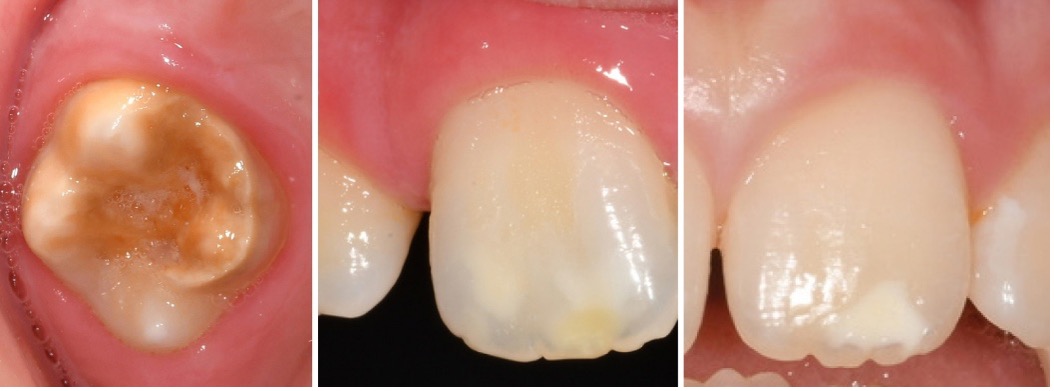
It can be incredibly alarming to notice that your child’s new teeth look discoloured, matte, or unusually fragile. In the dental world, this condition is known as Dental Hypomineralisation, but it is most commonly referred to as “Chalky Teeth.”
To help ease your worries and give you clear answers, Dr David Porzig and the team at Lifestyle Dental Studio have put together this guide to answering the most frequently asked questions about chalky teeth.
What exactly are “chalky teeth” (Dental Hypomineralisation)?
“Chalky teeth” is the patient-friendly name for dental hypomineralisation. It simply means that your child’s tooth enamel did not mineralise or harden properly while it was still forming deep under the gums. Instead of developing into a rock-hard, shiny, protective outer layer, the enamel remains soft, porous, and weak. Visually, these teeth often have a matte or creamy appearance and display distinct white, yellow, or brown patches.
Did I cause my child’s hypomineralisation by giving them too much sugar?
No, absolutely not. It is incredibly important for parents to know that hypomineralisation has nothing to do with sugar consumption, poor brushing habits, or parenting choices. Because this condition develops deep inside the jaw during the first three years of a child’s life, it is entirely systemic. You did not cause this, and you could not have prevented it through diet or oral hygiene alone.
What actually causes hypomineralisation?
While dental researchers are still investigating the exact origins, current evidence strongly links the condition to childhood health disruptions during early development. Common triggers during those first three years of life include high fevers, severe illnesses (such as middle ear or chest infections), severe asthma, or the frequent use of certain antibiotics. Because it happens so early in infancy, it is often difficult to pinpoint the exact single cause for your child.
Are all teeth equally affected?
No, the condition is highly selective. The most common form is medically referred to as Molar Incisor Hypomineralisation (MIH). As the name suggests, it primarily targets the first permanent adult molars and the adult incisors (the front teeth). In our studio, we see affected adult molars far more frequently than affected front incisors.
What should be done for hypomineralised teeth?
Because chalky enamel is much weaker than healthy enamel, these teeth require prompt professional attention. Depending on the size, location, and severity of the damaged enamel, our treatment response will vary to best protect your child’s comfort:
- Mildly affected teeth: These teeth usually show slight colour changes and may experience mild sensitivity. We closely monitor these teeth and often protect them using composite resin fissure sealants or conservative restorations to block out decay.
- Moderately affected teeth: These teeth show obvious changes to their normal colour and structural integrity. They are highly prone to rapid decay and are often quite sensitive or troublesome for children. We typically restore these teeth using specialised glass ionomer materials, as standard white composite fillings do not bond well to the altered, porous enamel structure.
- Heavily affected teeth: These teeth display severe changes to their shape, structure, and colour, causing them to break and decay very easily. Because they can be extremely uncomfortable, we often collaborate with a trusted local orthodontist. This multidisciplinary approach ensures we can strategically manage the removal and long-term replacement of these teeth to protect your child’s adult bite.

Leave a Comment